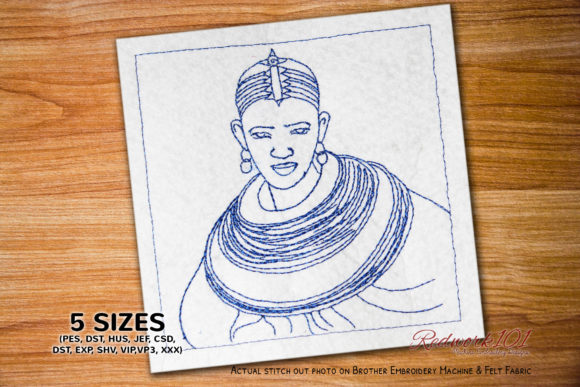
Native African Redwork: A Designer's Review for Business Merchandise
As a professional embroidery designer working with small businesses, I evaluate every new design file not just for its beauty, but for its functional potential on branded merchandise. When considering Native African Redwork for commercial use—from patches for a local café’s staff aprons to tote bags for a boutique—the review process is grounded in real-world application. This is my assessment.
First Impression: Visual Personality for Brand Identity
The title Native African Redwork immediately suggests a design rooted in cultural aesthetics and traditional technique. Redwork embroidery historically carries a classic, handmade, and narrative quality. For a business, this translates into a visual identity that feels authentic, artistic, and engaging. It’s not a sterile, corporate logo; it’s a design that can convey craftsmanship, heritage, and a story. This is powerful for small businesses like creative studios, handmade shops, or artisan bakeries where the brand identity is tied to authenticity and care.
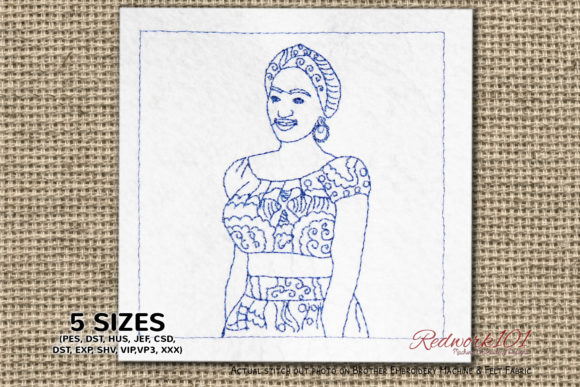
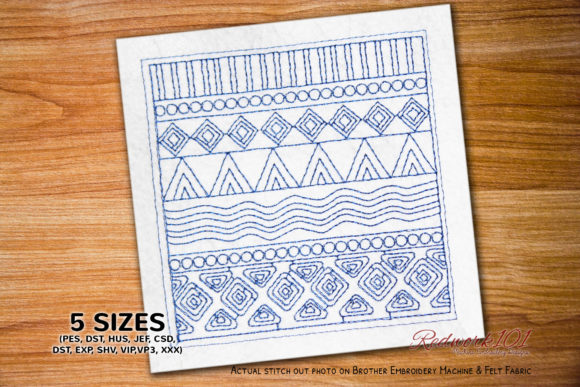
The product description notes that an optional box stitch surround may be present, and that its color can vary or be skipped. This flexibility is a significant plus. It means the core Native African Redwork motif can be isolated, making it adaptable. For a florist or pet brand wanting a clean chest logo on a polo shirt, you might skip the outer box for a simpler look. For a café wanting a more decorative, framed patch on an apron, the box stitch could add a bold, defining border, enhancing its presence as a premium embroidered patch.
Performance in Real Business Applications
The true test of any digital embroidery file is how it stitches out on actual merchandise. Let’s walk through common small business uses.
Embroidered Patches and Product Labels
Native African Redwork has strong potential as a standalone embroidered patch. These can be applied to tote bags, denim jackets, or backpacks as customer merchandise, or used as product labels on handmade goods. The design’s inherent decorative quality elevates a simple item. However, patch application requires careful testing. You must check how the design condenses at smaller sizes—will the details remain clear on a 2-inch patch for a product tag? Testing on the intended fabric with proper stabilizer is non-negotiable.
Uniforms and Workwear: Caps, Aprons, and Shirts
For staff cap embroidery or apron embroidery, this design can serve as a distinctive accent. On a cap front, the curved surface and smaller area demand a simplified, bold version. The option to skip the outer box color here is crucial to reduce stitch density and ensure clean stitching on curved fabrics. On a chef’s apron or a work shirt sleeve, it becomes a mark of pride and brand consistency, signaling a team that values presentation.
Tote Bags and Customer Merchandise
This is a prime application. A tote bag design featuring Native African Redwork becomes a stylish, reusable brand asset. The design should be scaled appropriately for the bag’s panel, ensuring it’s visually balanced and not overly dense, which could make the bag stiff. Creating a printable mockup for client approval before stitching is a best practice here, allowing the business owner to visualize the final custom apparel.
Event Merchandise and Etsy Branding
For a craft business selling on Etsy or for a local event, this embroidery file can be used to create limited-run merch. It adds a handmade product feel that buyers seek. It can boost perceived product value and customer engagement simply by being more unique than a generic printed logo.
Where to Use Native African Redwork with Caution
Even promising designs have limitations. Professional commercial embroidery requires knowing these to avoid costly errors.
- Very Small Patch Sizes: Intricate details may blur. Always run a test stitch at the intended miniature size.
- High-Stitch-Density Areas: If the design is very detailed, it may be too dense for lightweight fabrics like thin polo shirts, potentially causing puckering.
- Dark Uniform Fabrics: The description mentions color choices. If the design uses lighter threads, contrast on dark fabrics is key for visibility. Test thread color contrast on a swatch of the actual uniform material.
- Items for Frequent Washing: For merchandise like work shirts that will be laundered often, a robust stitch structure is needed. Check that outlines and fills are secure.
- Tiny Lettering or Micro-Details: If the design contains fine textual elements, they may not stitch cleanly on textured fabric like canvas bags.
A fundamental rule: always test on real fabric first. Use the correct hoop size and stabilizer for the project. This reveals potential issues with spacing, pull, or clarity that a screen preview cannot.
Impact on Brand Identity and Customer Perception
Choosing Native African Redwork for your small business merch isn’t just a decoration choice; it’s a brand communication decision.
- Professionalism & Trust: Well-executed embroidery signals quality and investment in your brand. It moves beyond a basic printed logo.
- Visual Consistency: Using the same design across caps, aprons, and tote bags creates a cohesive brand image that aids recognition.
- Enhanced Product Value: A handmade candle with an embroidered label patch, or a tote bag with this design, can command a higher price point because the embellishment adds tangible craft value.
- Handmade Presentation: For Etsy sellers and crafters, it aligns perfectly with the aesthetic buyers expect, fostering deeper buyer engagement.
It’s vital, however, to ensure the design’s style aligns with your brand’s core message. Does the cultural and artistic resonance of Native African Redwork complement your business story?
Practical Designer Notes for Business Implementation
Before you run production, follow these steps.
- Test in Black and White First: Stitch a simple monochrome version to assess the fundamental structure and outline integrity without color distractions.
- Check Small Patch Size Performance: As noted, embroider it at the smallest size you intend to use (e.g., for a product label).
- Review Thread Color Contrast: Based on the description’s note about optional box colors, plan your thread colors for maximum visibility on your chosen fabric colors.
- Create a Client Mockup: Use a printable mockup to show the business owner how it will look on the final cap, bag, or uniform. This avoids post-production disputes.
- Compare Beside Other Assets: Place the stitched sample beside your other brand design assets (like logos, fonts) to ensure visual harmony.
- Confirm Commercial Licensing: Before using any machine embroidery design for business merchandise, verify the license terms allow for commercial embroidery and product sales. If the file details don’t specify, you must check with the seller or distributor.
Remember, the product description provides key operational insight: the box stitch is optional, and its color can be skipped. This gives you control to adapt Native African Redwork for your specific project—whether you need a minimalist logo or a framed decorative patch. By methodically testing and adapting, this design can become a versatile and valuable part of your small business’s branded world.